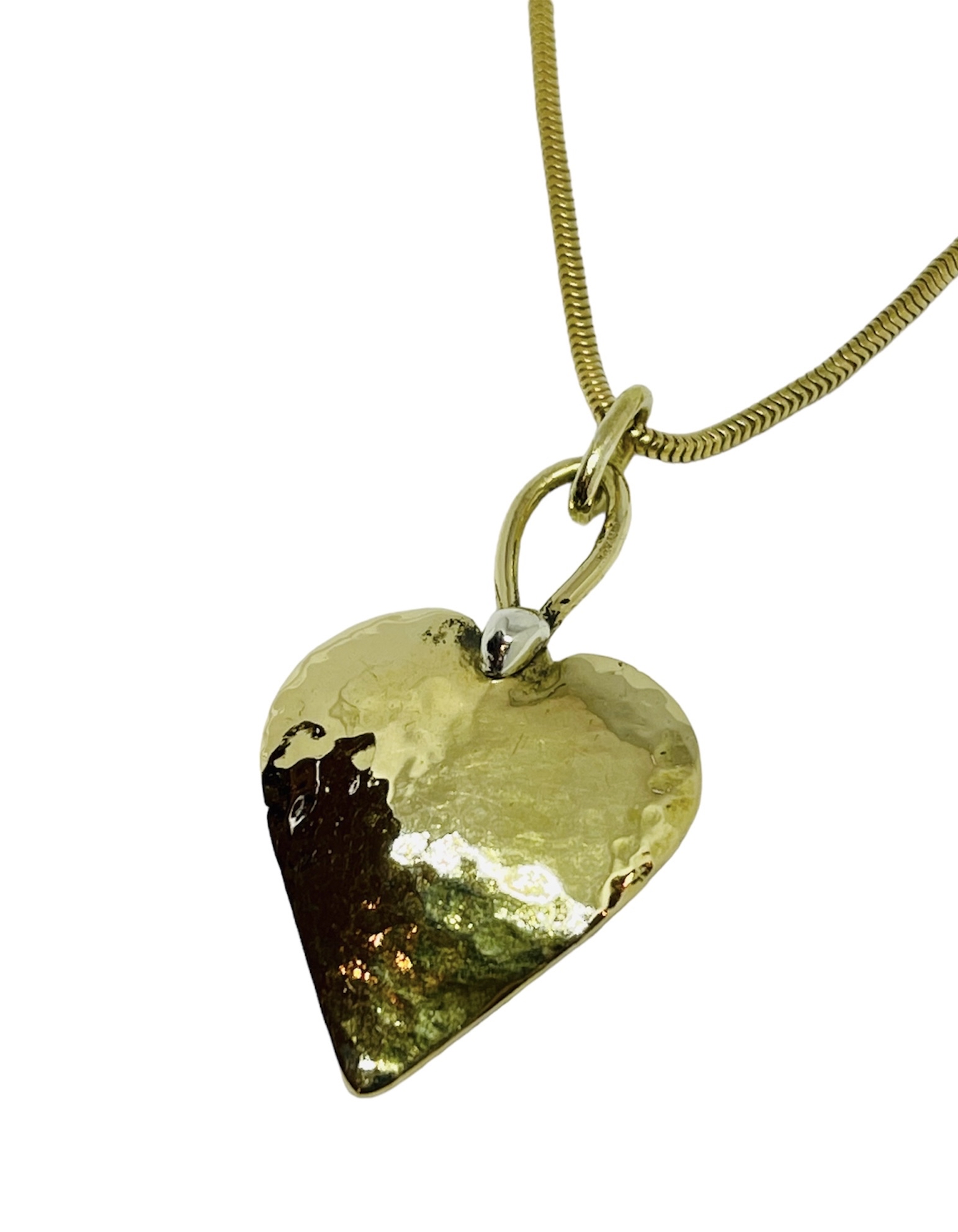
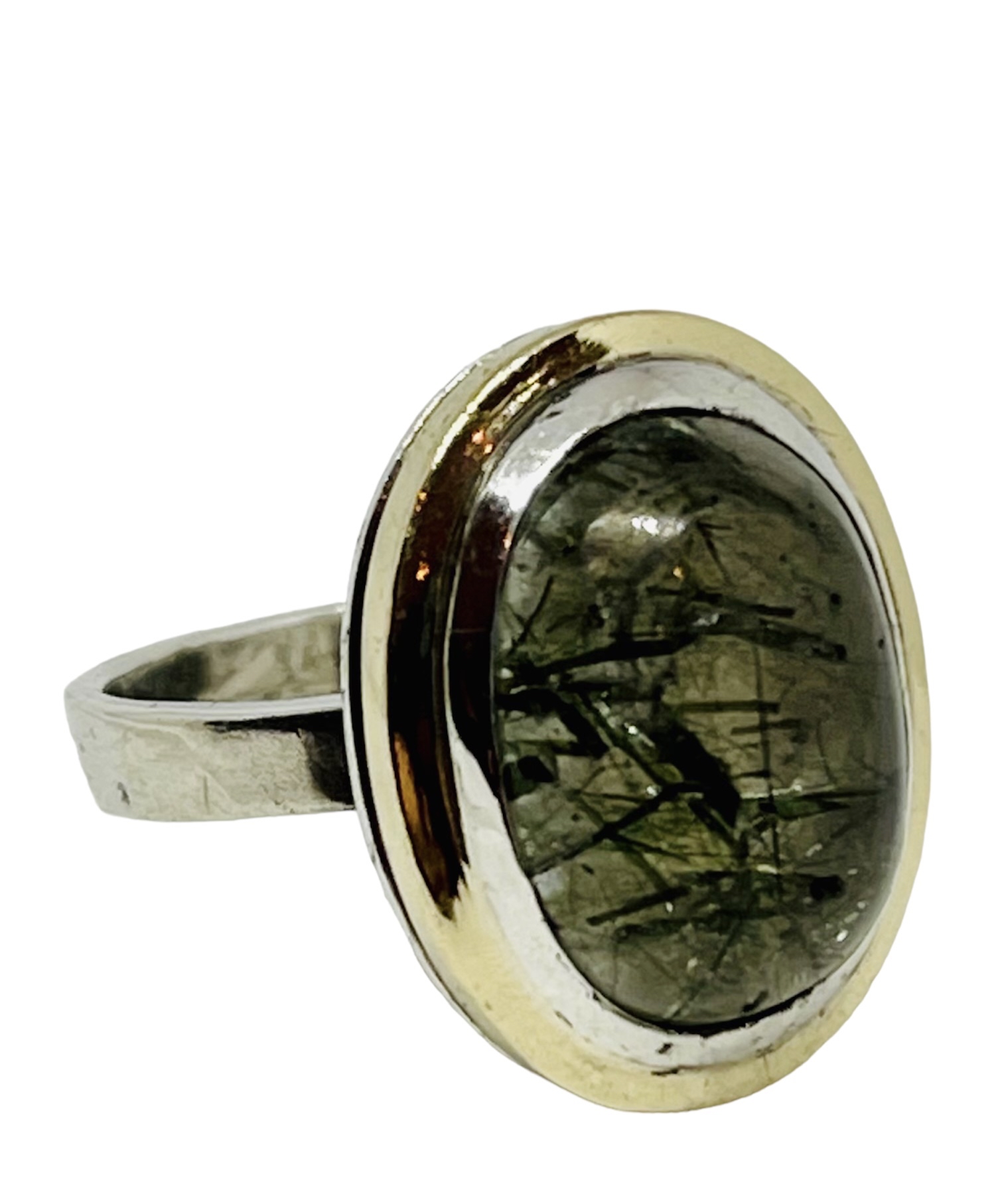
Specialism · mixed-metal bezel setting The setting style that recurs across the bench.
A gold rim around a silver-set stone
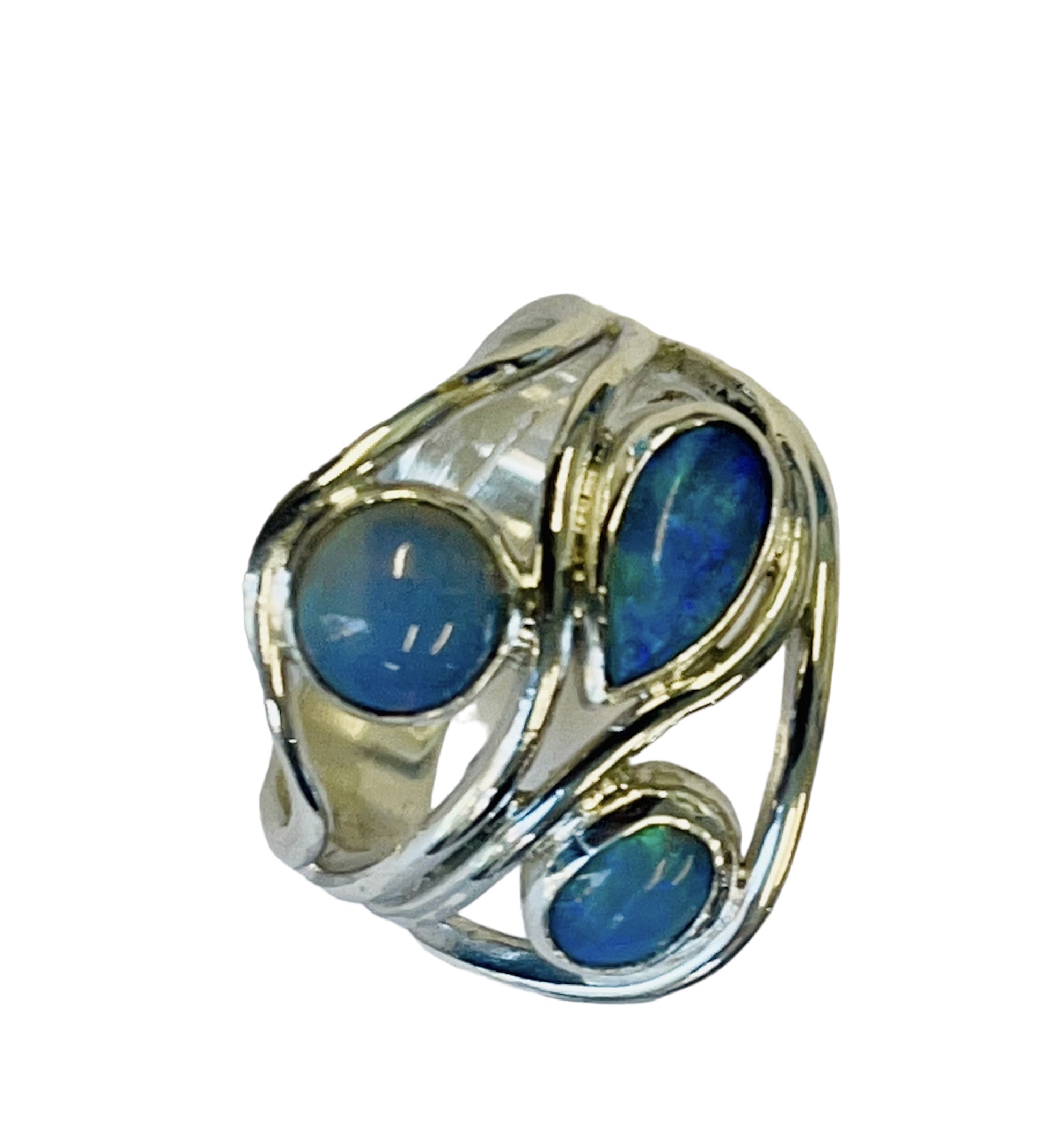
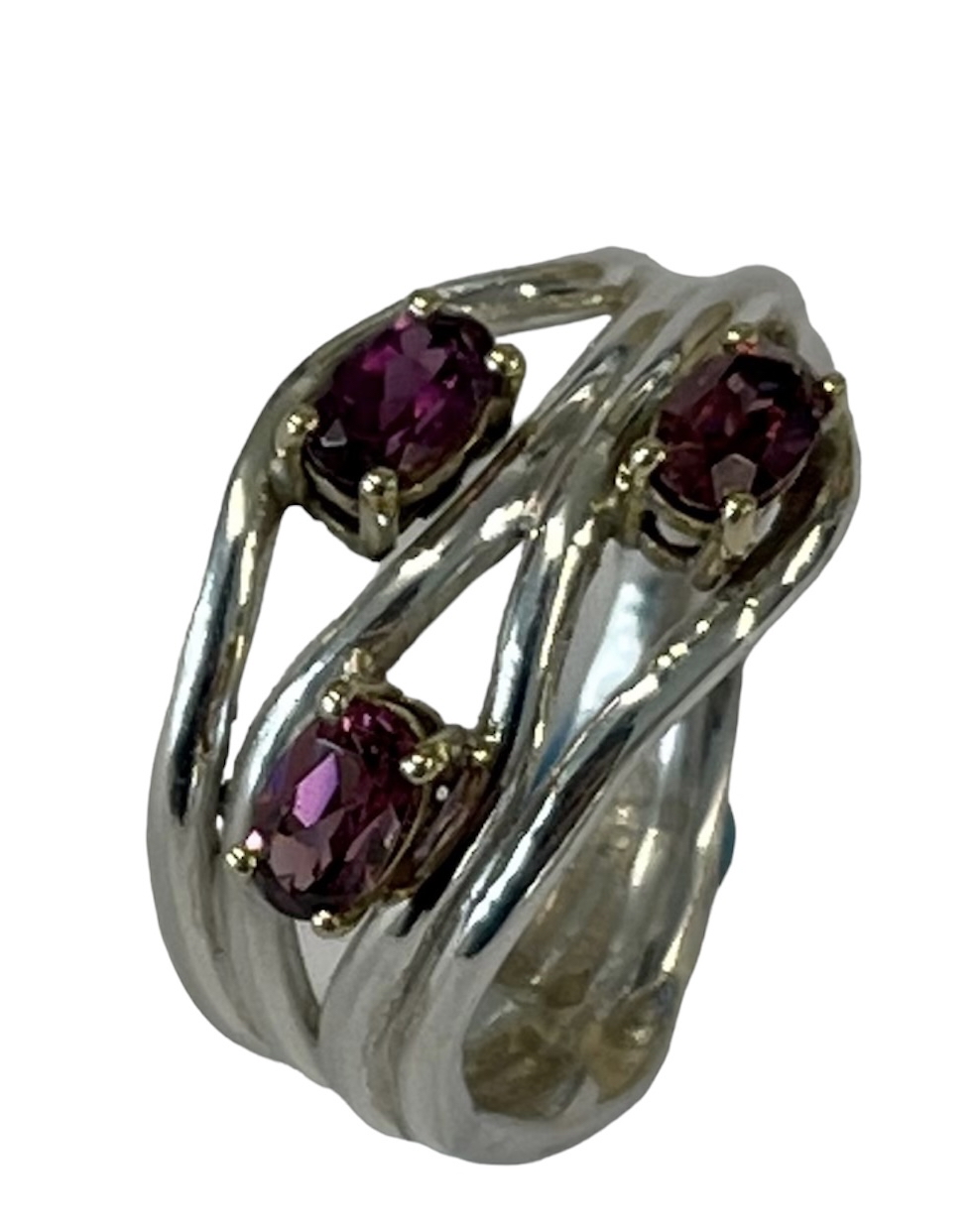
Look across the portfolio (the opal trilogy, the rhodolite ring, the rutile cabochon) and the same move keeps appearing: a yellow-gold rim soldered around a stone that is seated in a silver bezel, mounted on a silver shank. Visually it reads as one decision. On the bench it is two metals, two solder joins, two heat profiles. Gold and silver melt at different temperatures and the gold rim has to seat first without melting the silver bezel underneath. The Gemmology BA from Plymouth College of Art and Design matters here: I am picking joins and heat profiles around what the stone will tolerate, not the other way around.
Hallmarking on every piece
Every finished piece carries my own registered sponsor's mark, struck before it leaves the workshop. In the UK that mark is filed with one of the assay offices and registers me, by name, as the maker. It is the single most useful trust signal a UK jewellery customer can read on a piece: it ties the work back to one pair of hands, not a workshop or a chain. If a piece I made twenty years from now turns up on a bench, the hallmark will still say who made it.
Why this matters on a remodel. Inherited pieces often combine metals you cannot see (a silver shank that was once part of a gold ring, a soldered repair done at a temperature that left the stone fragile). I work out what the metal will support before I melt anything down, and where the new piece needs a mixed-metal setting, the bezel pattern above is what makes it possible.